Buying an RV
Choose trips before RV types
Start with the trips you expect to take before comparing RV types. A few weekend trips each year need less living space and storage than extended road trips, seasonal stays, or full-time living. Longer stays increase the need for usable beds, food storage, workspace, and reliable water, power, and waste capacity. Frequent moves make easy driving or towing, quick setup, fuel stops, and campground access more valuable.
Write down who will travel, how long trips will last, what equipment you will bring, and where you expect to camp. Count travel seats separately from beds. A trailer or motorhome may sleep several people without providing a designated, seat-belted seat for each passenger while moving. Identify essentials such as a bathroom, separate beds, accessible storage, workspace, or room for bicycles and other outdoor equipment. Then separate those needs from preferences. Mountain grades, rough roads, hot or cold weather, campground length limits, and how often you plan to move should shape the choice.
If you plan to tow a trailer, confirm that the specific tow vehicle and trailer work together before choosing a floor plan. Compare the vehicle’s manufacturer ratings and labels with the trailer’s expected loaded weight. GVWR, or gross vehicle weight rating, is the maximum loaded weight of a vehicle or trailer. GCWR, or gross combined weight rating, is the maximum allowed weight of the loaded tow vehicle and loaded trailer together. Also check the tow vehicle’s tow rating, payload rating, hitch rating, and axle ratings.
Payload is the weight the tow vehicle carries: passengers, cargo, accessories, and trailer tongue weight. Use the door-jamb payload label for that vehicle as equipped, the owner’s manual, the trailer’s rating label, and scale weights from a loaded trip. A pickup with a 1,500-pound payload rating has only 400 pounds remaining if passengers, cargo, accessories, and tongue weight total 1,100 pounds. The trailer must also stay within its GVWR. The full combination must remain within the truck’s tow and axle ratings, as well as its payload, hitch, and combined-weight ratings. Meeting every rating does not guarantee an easy drive in crosswinds, steep terrain, or heavy traffic.
Ownership also requires storage space, routine maintenance, repairs, and time to learn the water, electrical, propane, and waste systems. Regular upkeep and service records help preserve condition and support resale value. Renting or borrowing a similar RV for a short trip shows how its space, seating, driving or towing, and setup demands fit your plans before you buy.
Match the RV to your usual trips, verify loaded towing weights before buying, and include storage and maintenance in the ownership decision.
Counterargument: Starting with floor plans makes sense when a nonnegotiable need, such as an accessible bathroom or separate sleeping area, rules out most options. Confirm that the remaining choices still fit your travel and towing plans.
FAQ: Should I rent before buying? Yes. A short trip reveals whether the beds, storage, travel seats, driving position, towing behavior, and campsite setup work for your actual use.
Compare RV types
Motorhomes combine the vehicle and living space, while towable RVs require a separate tow vehicle. Larger RVs provide more room and cost more to buy, and they require more fuel or towing capacity plus storage space. Compare the exact model year and floor plan because dimensions, weights, cargo capacity, and seating vary within every RV category.
Motorhomes
Class A motorhomes are generally the largest, with the most living space, but need more room to maneuver and park and typically use more fuel. Class B camper vans are easier to drive and park, with less interior and storage space. Class C motorhomes fall between them in size and commonly use the area above the cab for a bed or storage.
Check travel seating separately from sleeping capacity. Confirm that every passenger has a designated seat with a seat belt for use while the motorhome is moving.
Towable RVs
Travel trailers attach to a conventional bumper-mounted or weight-distribution hitch. Fifth wheels connect to a hitch in a pickup bed. Folding camping trailers collapse for travel and generally offer less enclosed living space than larger trailers. Toy haulers reserve part of the layout for equipment, reducing living space or available cargo capacity. Truck campers sit in a pickup bed, so the truck’s payload, axle, and tire ratings matter.
Compare the trailer’s loaded weight, length, hitch or pin weight, and campsite limits alongside the floor plan. Match the specific trailer to the specific tow vehicle using manufacturer ratings and the RV’s expected loaded weight, including water, propane, passengers, and gear.
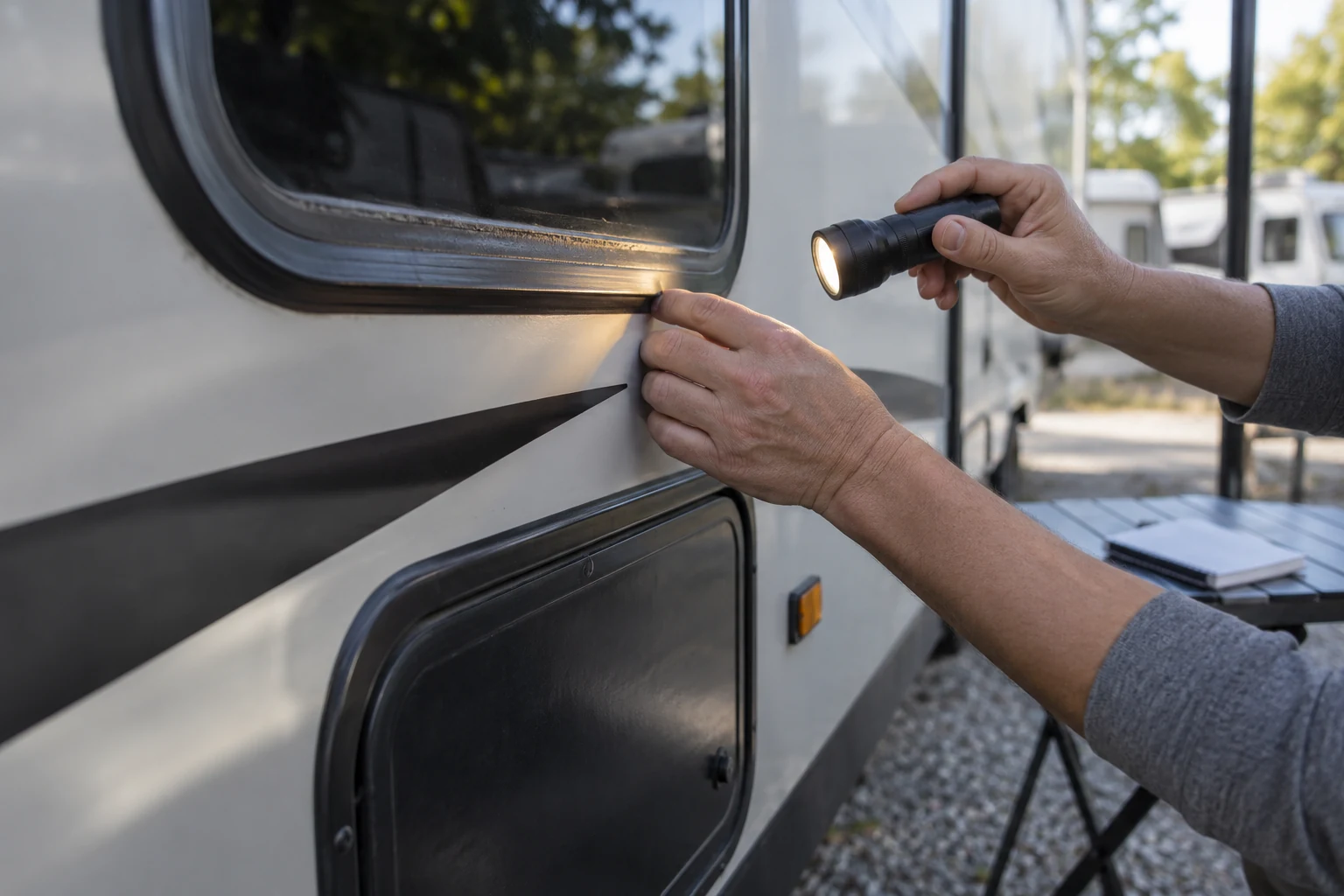
Inspect the exact RV
After narrowing the type, compare exact models through manufacturer specifications and an in-person inspection. Start at the roof. Check seals around vents, skylights, and air conditioners. Inside, look for stains, musty odors, soft floors or walls, and warped cabinets. Inspect windows, exterior siding, tires, electrical connections, and, on towables, the axles and suspension. Failed roof or exterior seals can let water enter hidden areas until rot or mold becomes extensive.
Ask for service records, then compare their dates, mileage, and listed repairs with the RV’s visible condition. Records document completed work; they do not prove that the RV has no concealed damage. An independent RV inspector can identify many costly defects, although inaccessible areas remain outside any inspection.
Example: Two similar used travel trailers are for sale. One costs less but has soft flooring near a window and no record of seal repairs. The higher-priced trailer has firm floors and documented maintenance. The cheaper trailer is a sensible purchase only if an inspection identifies the damage, the repair estimate fits the budget, and the buyer accepts the remaining risk.
Purchase price does not show the full cost of ownership. Include the cost of a suitable tow vehicle, fuel, insurance, storage, maintenance, and repairs. Paying more makes sense when added space or equipment supports the trips you actually take. A lower-cost RV makes sense when it fits those trips, passes inspection, and leaves money for upkeep.
Choose an RV based on travel fit, driving or towing demands, condition, and total ownership cost.
Which type should I choose?
Choose a motorhome when you want the living area and vehicle combined. Choose a towable RV when you own, or plan to buy, a vehicle that meets its towing or payload requirements. Confirm the exact model’s specifications and inspect the individual RV before buying.
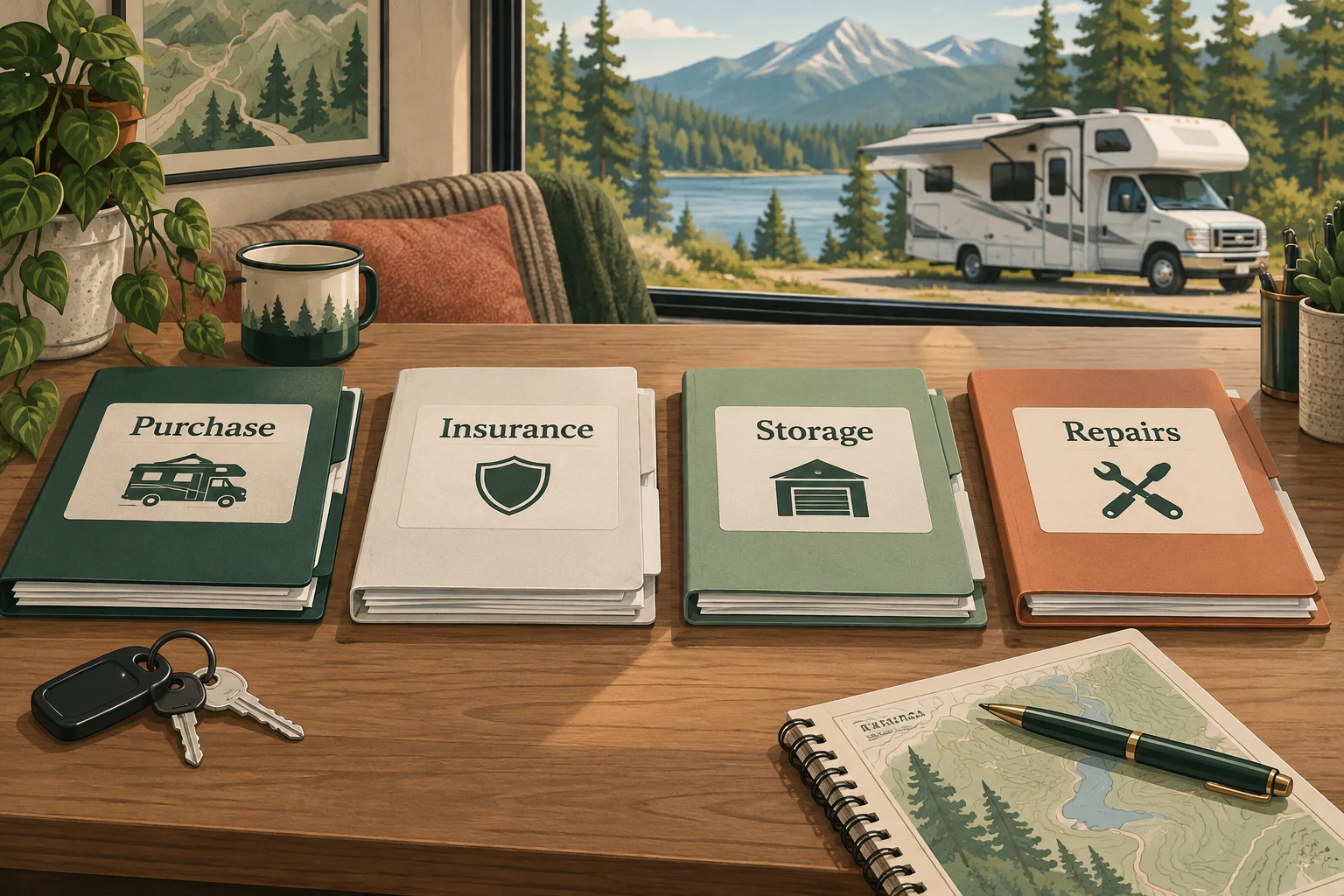
Set the full budget
Set a budget for buying, financing, and owning the RV, not just its advertised price. Include sales tax, title and registration fees, dealer or delivery charges, required towing equipment, and immediate repairs or upgrades. A towable RV also requires a tow vehicle rated for its loaded weight. Add essential camping gear if you do not already own it.
Separate costs that continue while the RV is parked from costs that rise with travel. Insurance, registration, loan payments, and storage continue during periods of non-use. Fuel, campground stays, maintenance, and repairs rise with mileage and use. RV ownership costs extend beyond the purchase price.
Get insurance quotes for the specific RV before you commit. Premiums depend on the RV, coverage limits, location, intended use, and insurer. State rules for taxes, registration, licensing, and insurance depend on the RV type and where you register it. Check current fees and requirements with your state motor vehicle and tax agencies. If you finance the purchase, the lender may require coverage beyond the state minimum.
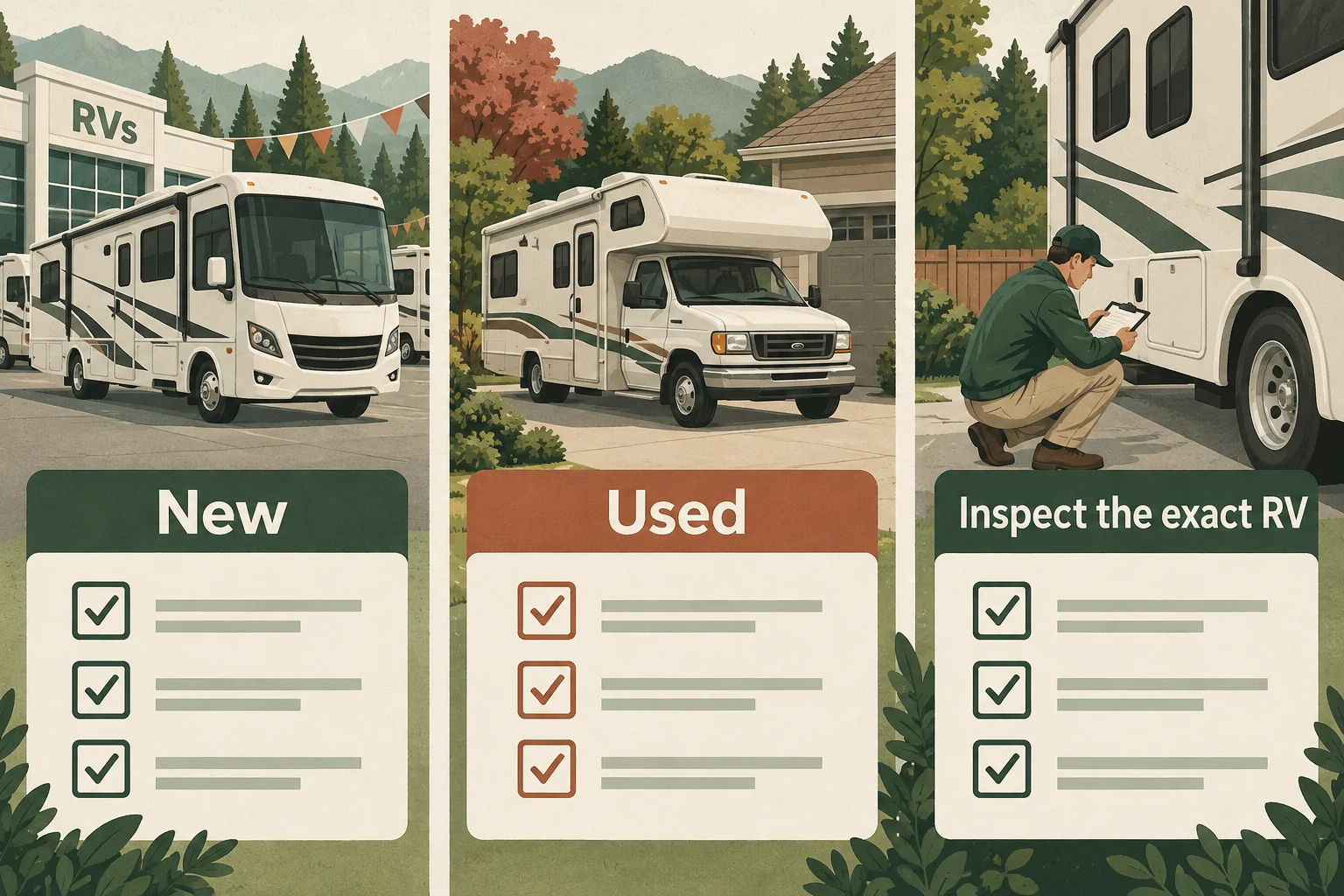
New vs. used RVs
A new RV includes a new-vehicle warranty and offers more choice among current layouts, but it costs more upfront and may lose value soon after purchase. A used RV often costs less and may already have had early defects repaired. Review its condition, maintenance records, parts availability, and any remaining warranty carefully.
Compare similar models by age, condition, equipment, and documented service rather than asking price alone. Check the warranty for covered items and exclusions. Note any required service and transfer rules, then confirm the details with the manufacturer or warranty provider.
For example, a new RV listed at $60,000 and a used RV listed at $45,000 appear far apart. If taxes, fees, and setup add $5,000 to each purchase, and the used RV needs $6,000 in repairs, their initial costs become $65,000 and $56,000. The asking price alone does not settle the comparison.
Compare RV loan terms
Get terms from more than one lender. Compare the APR, down payment, fees, loan term, total repayment, and early-payment conditions. APR reflects the yearly borrowing cost, including certain lender fees. A longer term lowers the monthly payment, increases total interest, and extends the period you owe money on the RV.
Ask how each lender handles the RV’s age, required down payment, and collateral requirements. Confirm the insurance coverage required for the loan and whether the lender will place a lien, a legal claim securing the loan, on the RV. Do not choose a loan term solely because it produces a low payment if the RV is unlikely to remain useful to you for that long.
What should the budget withstand? Plan for a major repair, a period of little or no use, and an earlier-than-planned sale. Keep a repair reserve that reflects the RV’s age and condition. Treat resale estimates as uncertain because value depends on the RV type, age, condition, demand, and wider market.
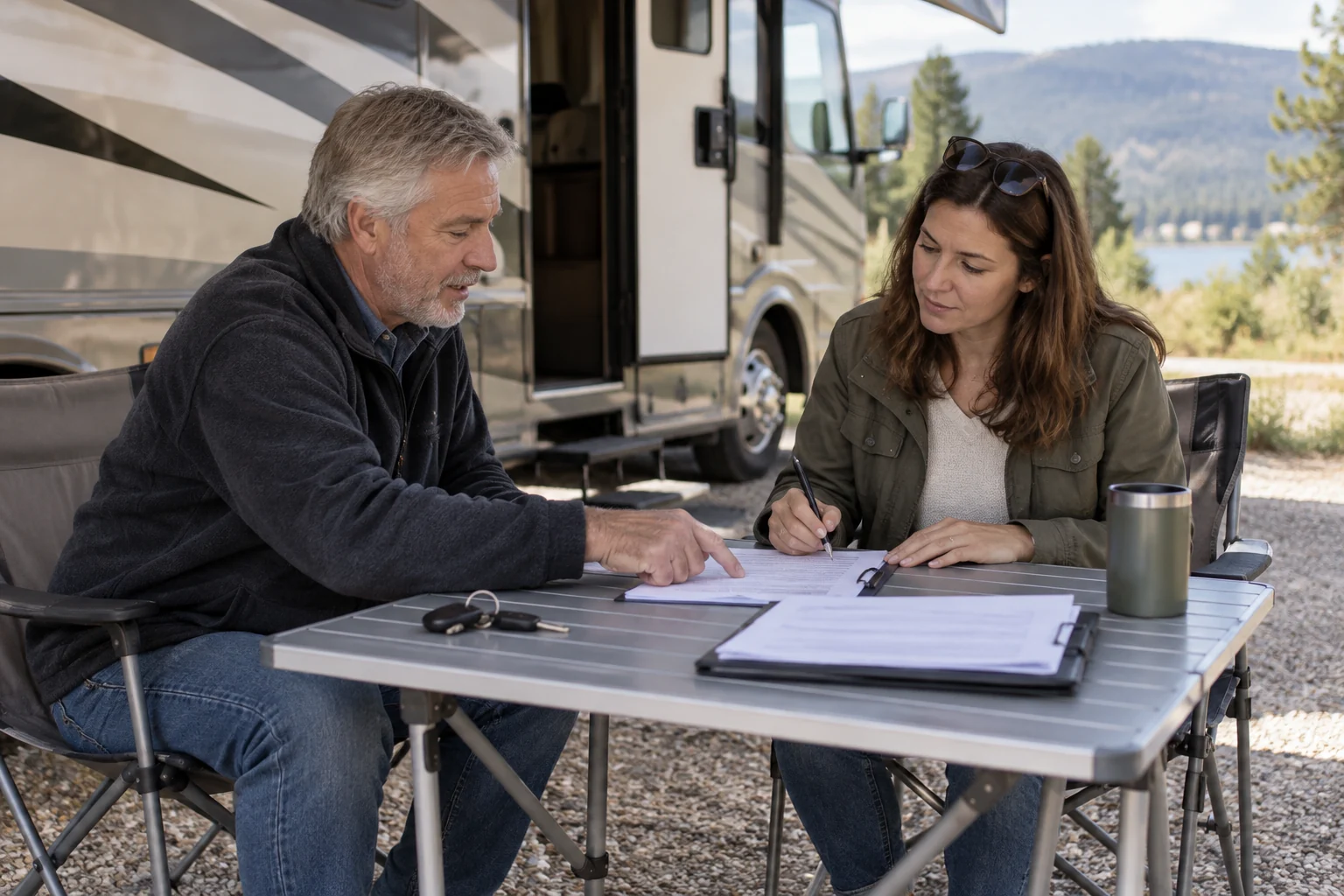
RV buying checklist
- Match the RV to your actual trips and travel needs. Count seat-belted passenger positions separately from beds. For a towable RV, check the loaded trailer against the tow vehicle’s tow, payload, hitch, and axle ratings.
- Verify the specific RV before paying a deposit. Match its vehicle identification number (VIN) and title to the seller’s documents, check for unpaid liens and open recalls, review service records, and arrange an independent inspection for water intrusion, structural damage, and system faults.
- Compare condition and protections, not just asking prices. Weigh new and used RVs, dealer and private-sale terms, warranty coverage, parts availability, and likely repairs. Walk away if the seller blocks an inspection, the title cannot be transferred, or serious damage remains unexplained.
- Set a full ownership budget and compare loan costs. Include taxes, registration, insurance, storage, fuel, maintenance, repairs, and required equipment. Compare loan APR, fees, term, and total repayment, not only the monthly payment.
FAQ
Should I buy a new or used RV?
A new RV has current floor plans and a new-vehicle warranty, but it costs more upfront and can lose value quickly after purchase. A used RV may cost less, but check its maintenance records, condition, parts availability, and any remaining warranty before comparing asking prices.
How do I check whether a used RV has a clear title?
Match the vehicle identification number (VIN) on the RV to the title and purchase documents, then check for recorded liens through the relevant state agency or an authorized title service. If a lender still holds a lien, get written instructions for paying it off and transferring the title before handing over money. Title procedures vary by state.
How do I check for recalls before buying?
Search the RV’s VIN using the National Highway Traffic Safety Administration’s recall lookup, and ask the manufacturer or dealer whether listed repairs have been completed. A recall search does not identify every defect or maintenance issue, so still arrange an inspection.
Do I need an independent RV inspection?
Yes. Hire an inspector who works on the RV’s type and systems, and arrange the inspection before your deposit becomes nonrefundable. An inspection assesses the RV’s condition that day; it does not guarantee against hidden defects or future failures.
What should an RV inspector check?
Ask the inspector to check for water intrusion, soft or damaged flooring, roof and wall condition, tires, and the operation of major appliances and onboard systems. Watch each system run during a demonstration, and compare the findings with service records. A clean appearance alone does not establish that the RV is sound.
How do I know if my vehicle can tow a trailer?
Compare the tow vehicle’s manufacturer ratings with the trailer’s actual loaded weight and the weight carried on the hitch. Also check payload and axle limits, since a trailer can fall within one rating while exceeding another. Use the exact vehicle and trailer specifications rather than an advertised dry weight.
What costs should I budget beyond the RV’s price?
Budget for taxes, title and registration fees, and dealer or delivery charges. Add insurance, financing costs, storage, fuel, and maintenance to that amount, along with any immediate repairs or equipment. Get an insurance quote for the specific RV. When comparing loans, look at APR, term, fees, and total repayment alongside the monthly payment.
What if the seller still owes money on the RV?
Pause the sale until the lender explains how it will receive payoff funds and release its lien, and confirm how the title will transfer under your state’s rules. Do not rely on a verbal promise that the seller will pay the loan after the sale.
When should I walk away from an RV deal?
Walk away if the seller refuses an independent inspection, the VIN or title details do not match, or the seller cannot explain an outstanding lien. Also reconsider the purchase if the seller will not demonstrate key systems or if the written contract changes the agreed price, deposit terms, or promised repairs.